

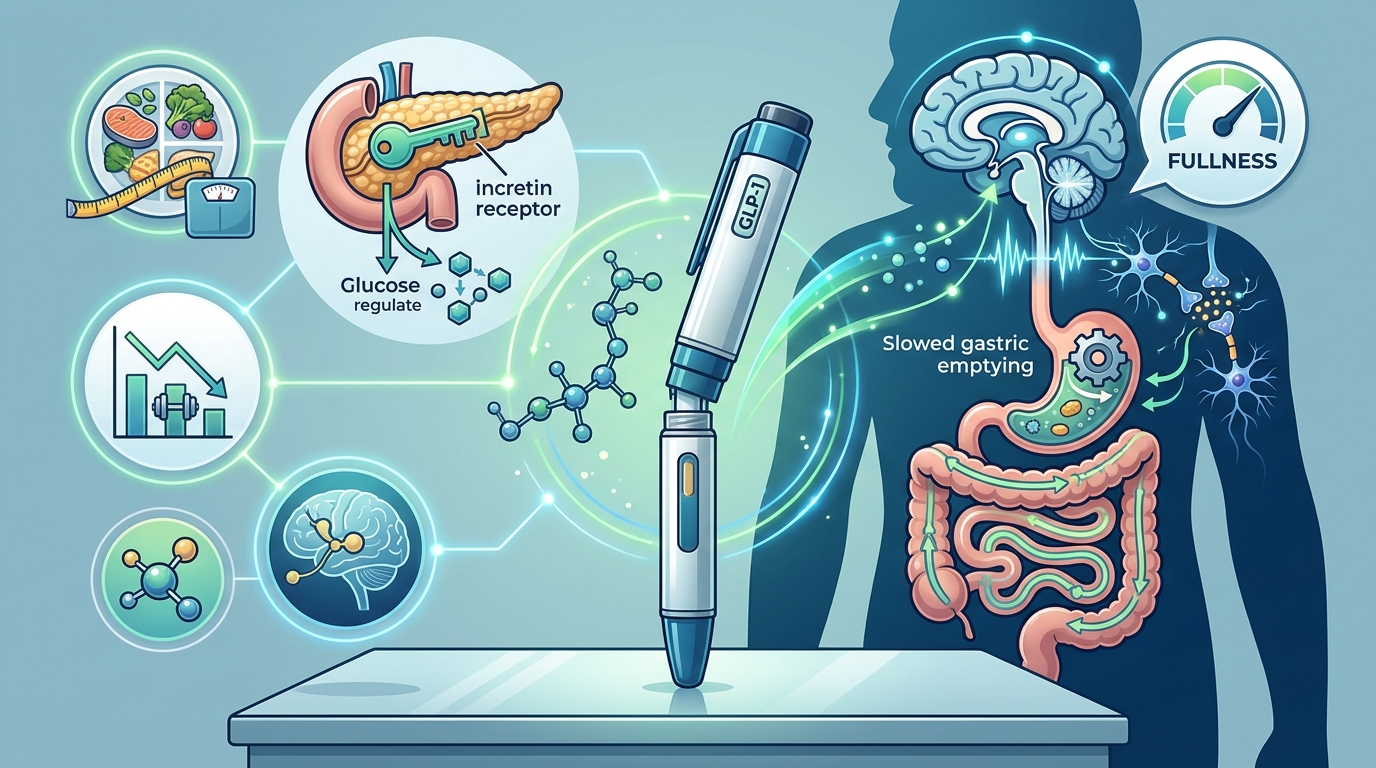
GLP-1 therapy is a class of medication that mimics the body's natural incretin hormone to regulate blood sugar and reduce appetite. It works by signaling the brain to feel full and slowing gastric emptying. At The Dynamic Care Clinic, we integrate these treatments with personalized diet counseling to support sustainable, healthy weight loss.
The Biological Mechanism of GLP-1
Glucagon-like peptide-1 (GLP-1) is an incretin hormone produced by the gut in response to food intake. Its primary function is to stimulate insulin release and suppress glucagon secretion. When a person takes a GLP-1 receptor agonist, the medication binds to specific receptors in the brain and pancreas. This interaction triggers a cascade of physiological responses that directly influence how the body processes energy.
The most significant effect for weight management is the modulation of appetite. The medication activates satiety centers in the hypothalamus, which is the part of the brain that regulates hunger. This leads to a natural reduction in food cravings and a faster sense of fullness after eating. Additionally, the drug slows gastric emptying, meaning food stays in the stomach longer. This prolonged digestion helps maintain stable blood sugar levels and prevents the rapid spikes and crashes that often trigger overeating.
Understanding this mechanism is crucial for patients. It is not a magic pill that burns fat on its own. Instead, it is a physiological tool that resets the body's hunger signals. By addressing the root cause of excessive appetite, patients can make better dietary choices without feeling deprived. This biological support is the foundation of effective weight loss therapy.
Clinical Evidence and Efficacy
Clinical trials have demonstrated that GLP-1 receptor agonists can lead to significant weight reduction. Studies on semaglutide, a widely used GLP-1 medication, have shown that participants lost a substantial percentage of their body weight over several months. This efficacy is often comparable to or exceeds that of older weight loss medications. The data supports the use of these drugs as a viable medical intervention for obesity and overweight individuals with related health conditions.
The impact extends beyond the scale. Patients often experience improvements in cardiovascular markers, such as blood pressure and lipid profiles. These systemic benefits highlight the role of GLP-1 therapy in overall metabolic health. For individuals with type 2 diabetes, the dual benefit of weight loss and glycemic control is particularly valuable. The medication helps manage the condition while addressing the underlying obesity that complicates treatment.
It is important to note that results vary by individual. Factors such as baseline weight, diet, and physical activity levels influence outcomes. However, the consistent trend in clinical data is clear: GLP-1 therapy is a powerful tool for weight management. It provides a structured, medical approach to a condition that affects millions of people. This evidence base allows healthcare providers to prescribe these treatments with confidence and precision.
Integrating GLP-1 with Holistic Care
At The Dynamic Care Clinic, we view GLP-1 therapy as one component of a comprehensive weight loss strategy. We do not prescribe medication in isolation. Instead, we combine it with personalized diet counseling and lifestyle modifications. This holistic approach ensures that patients develop sustainable habits that support long-term health. Our team works closely with each individual to create a plan that fits their unique needs and goals.
Nutritional guidance is central to our practice. We help patients navigate the changes in appetite and digestion that come with GLP-1 therapy. Proper hydration and nutrient-dense eating are essential to prevent side effects and maintain energy levels. We also monitor progress regularly to adjust the treatment plan as needed. This ongoing support helps patients stay motivated and achieve their desired outcomes.
Our clinic offers a range of services that complement GLP-1 therapy. From diet counseling and weight loss programs to IV therapy for nutrient replenishment, we provide a full spectrum of care. We also address underlying hormonal imbalances that may contribute to weight gain. By treating the whole person, we ensure that weight loss is not just a temporary fix but a lasting transformation.
Safety Profile and Side Effects
Like all medications, GLP-1 receptor agonists have potential side effects. The most common are gastrointestinal, including nausea, vomiting, and diarrhea. These symptoms are usually mild to moderate and tend to decrease over time as the body adjusts. Starting with a low dose and gradually increasing it can help minimize these effects. Patients should communicate any persistent symptoms with their healthcare provider.
Contraindications exist for certain individuals. People with a personal or family history of medullary thyroid carcinoma should not use these drugs. This is due to a potential risk of thyroid C-cell tumors observed in animal studies. Additionally, patients with a history of pancreatitis should use caution. A thorough medical history review is essential before starting treatment. Our providers conduct detailed assessments to ensure safety and appropriateness for each patient.
Long-term safety data is still being gathered as these medications become more widely used. Current evidence suggests a favorable risk-benefit profile for most patients. However, ongoing monitoring is important. We emphasize the importance of regular check-ups and blood work to track progress and detect any potential issues early. This proactive approach ensures that patients receive the maximum benefit with minimal risk.
Lifestyle Factors and Long-Term Success
Medication alone is rarely sufficient for lasting weight loss. Physical activity plays a critical role in preserving muscle mass and improving metabolic health. Resistance training, in particular, helps maintain lean body weight while on GLP-1 therapy. We encourage patients to incorporate regular exercise into their routine. This not only supports weight loss but also improves overall fitness and well-being.
Behavioral changes are equally important. Developing a healthy relationship with food is a key goal of our counseling. We help patients identify emotional triggers and develop coping strategies that do not involve overeating. Mindfulness and stress management techniques can also be beneficial. By addressing the psychological aspects of weight gain, we support a more comprehensive and sustainable approach to health.
Support systems are vital for long-term success. Having a network of family, friends, or support groups can make a significant difference. Our clinic provides a supportive environment where patients can share their experiences and receive encouragement. We also offer hormone therapy when appropriate to address underlying imbalances. This multi-faceted approach ensures that patients have the tools and support they need to maintain their results.
Key Takeaways
- GLP-1 therapy mimics a natural hormone to reduce appetite and slow digestion.
- Clinical trials show significant weight loss and improvements in metabolic health.
- Medication works best when combined with diet, exercise, and behavioral changes.
- Common side effects are usually gastrointestinal and tend to subside over time.
- Thorough medical screening is required to ensure safety and appropriateness.
- Long-term success depends on sustainable lifestyle habits and ongoing support.
Frequently Asked Questions
How quickly does GLP-1 therapy work for weight loss?
Most patients begin to notice a reduction in appetite within the first few weeks. Significant weight loss typically becomes apparent after several months of consistent use. The rate of loss varies by individual, but the initial phase often involves a rapid drop in weight as water and fat are mobilized.
Can I stop taking GLP-1 medication once I reach my goal?
Stopping the medication may lead to weight regain if lifestyle changes are not firmly established. We work with patients to develop sustainable habits before considering a taper. The goal is to transition from medication dependence to self-managed health maintenance.
Is GLP-1 therapy suitable for everyone?
No, it is not suitable for everyone. Individuals with certain medical conditions, such as a history of thyroid cancer or pancreatitis, may not be candidates. A comprehensive medical evaluation is necessary to determine if the therapy is safe and appropriate for your specific health profile.
Does GLP-1 therapy require a prescription?
Yes, GLP-1 receptor agonists are prescription medications. They must be prescribed and monitored by a licensed healthcare provider. This ensures that the treatment is tailored to your needs and that any side effects are managed appropriately.
How does GLP-1 therapy differ from other weight loss drugs?
GLP-1 therapy works primarily by targeting the brain's appetite centers and slowing gastric emptying. Other weight loss drugs may work through different mechanisms, such as blocking fat absorption or increasing metabolism. The choice of medication depends on the individual's health history and goals.
Will I lose muscle mass on GLP-1 therapy?
There is a risk of losing some muscle mass along with fat. To mitigate this, we recommend incorporating resistance training and ensuring adequate protein intake. Preserving lean muscle is important for maintaining metabolic rate and overall strength.
Start Your Journey with The Dynamic Care Clinic
GLP-1 therapy offers a powerful, evidence-based approach to weight loss and metabolic health. By understanding the mechanism and integrating it with holistic care, you can achieve sustainable results. At The Dynamic Care Clinic, we are committed to providing personalized, compassionate care that supports your unique journey. We combine advanced medical treatments with lifestyle guidance to help you reach your goals. To begin your consultation, schedule an appointment with our team today.